

What are three negative things of Christopher Columbus?. Más información aquí – What two mistakes did Columbus make about the earth

“(Columbus) made two mistakes,” he said. “He underestimated the circumference of the world and he did not realize that there was something between Asia and Western Europe.”With six sails, a bowsprit, foresail, mizzen, spritsail and two topsails, these ships were a burden to steer and commandeer. The crew of Columbus' ships faced many challenges when crossing the Atlantic Ocean. The adversities consisted of starvation, dehydration, Scurvy, (Lack of Vitamin C) and malnutrition.Columbus's journeys to the Americas opened the way for European countries to colonize and exploit those lands and their peoples. Trade was soon established between Europe and the Americas. Plants native to the Americas (such as potatoes, tomatoes, and tobacco) were imported to Europe.
5 Interesting Facts You Didn't Know About Christopher Columbus
- Christopher Columbus wasn't his given name.
- He didn't discover that the earth is round.
- He never set foot in North America.
- He was convinced he had landed in Asia.
- Columbus was sent back to Spain in chains and stripped of his governorship.
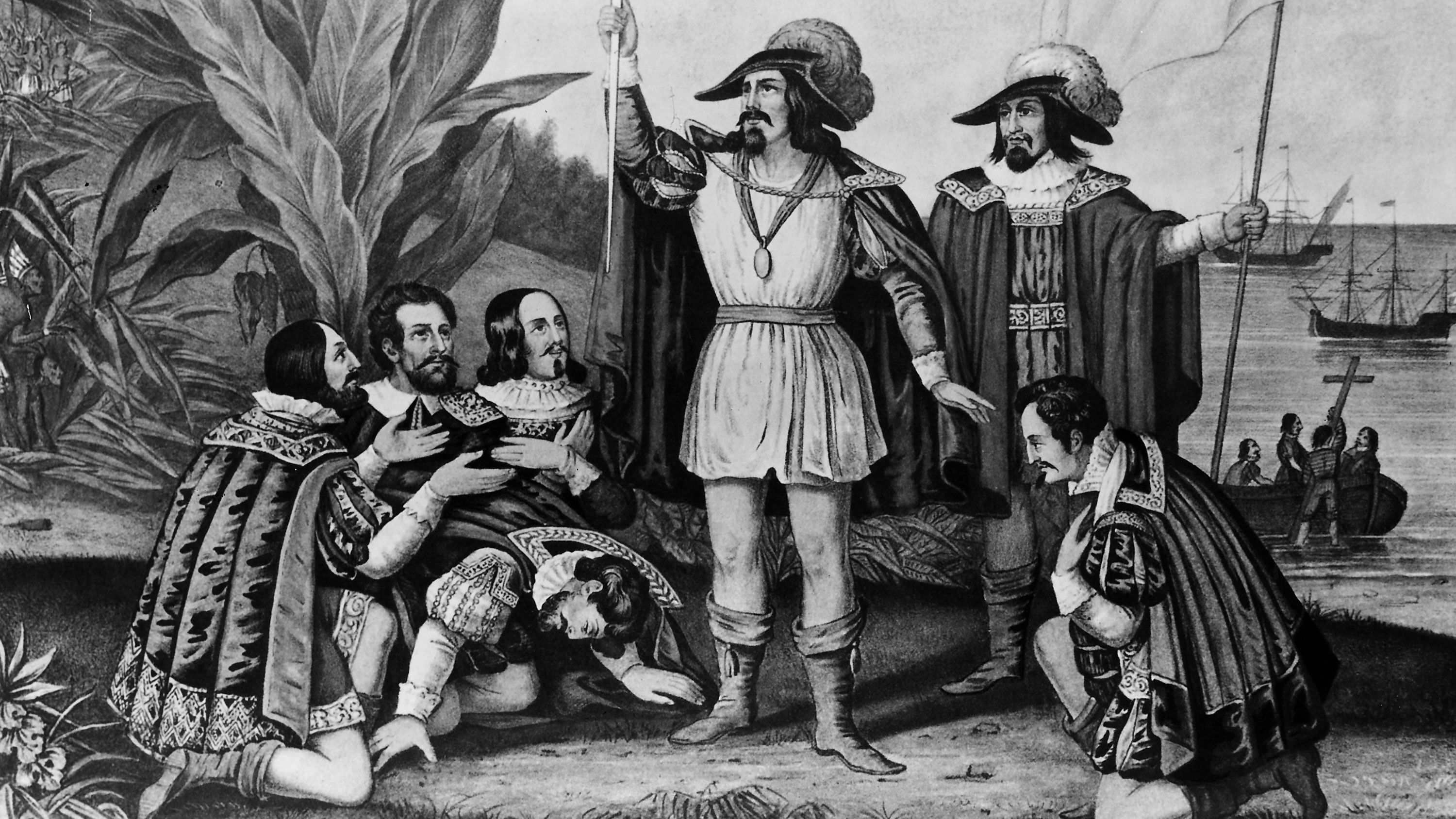
What two obstacles did Columbus face
Answer and Explanation: Christopher Columbus faced a few main obstacles: securing funding, gaining acceptance of his theory for the size of the Earth, and surviving the voyage itself. Funding was difficult as he required a patron that could afford a large crew for a long-distance journey.
What did Christopher Columbus fail to accomplish
Columbus was disappointed because he did not find a new route to the East. He returned to Spain in 1504. He hoped the king and queen would ask him to lead another expedition but they did not. He died in 1506, disappointed that he had not found a new route to the Far East.In terms of benefits the Columbian Exchange only positively affected the lives of the Europeans. They gained many things such as, crops, like maize and potatoes, land in the Americas, and slaves from Africa. On the other hand the negative impacts of the Columbian Exchange are the spread of disease, death, and slavery.Christopher Columbus was not his real name. The name he was actually given when he was born in Genoa was Cristoforo Colombo. Christopher Columbus began a career as a seafarer at the age of fourteen and later supported himself by selling maps and charts. Half of his voyages ended in disaster.
Did Christopher Columbus have guns
Columbus and other early explorers were probably the first Europeans to bring guns to the New World, archaeologists say. And the arquebus — a long-barreled, musket-like weapon — was most likely the first personal firearm on mainland America.

Columbus was disappointed because he did not find a new route to the East. He returned to Spain in 1504. He hoped the king and queen would ask him to lead another expedition but they did not. He died in 1506, disappointed that he had not found a new route to the Far East.Fear of water since he left school at the age of 14 to apprentice himself on a trading ship. He spent most of his life on the seas.4. Columbus was rejected three times over seven years (1485 – 1492) before finally getting approval and funds from the Catholic Monarchs Ferdinand and Isabella to make his voyage.
Christopher Columbus was one of the greatest and most celebrated explorers of all time. In 1492, his voyage to the New World expanded our view of the world and permanently linked Europe with the Americas. His discovery and the age of exploration that followed forever changed the course of history.
Possibly the most dramatic, immediate impact of the Columbian Exchange was the spread of diseases. In places where the local population had no or little resistance, especially the Americas, the effect was horrific. Prior to contact, indigenous populations thrived across North and South America.
.jpg?itok=ZS8r9xDr)
What were some negative effects of the Columbian Exchange
More than guns, the most devastating result of the Columbian Exchange was the spread of disease. In the years following European invasion, it is estimated that up to 95 percent of the Americas' total population died. That's roughly 20 million people. The native population was almost wiped out.5 Interesting Facts You Didn't Know About Christopher Columbus
- Christopher Columbus wasn't his given name.
- He didn't discover that the earth is round.
- He never set foot in North America.
- He was convinced he had landed in Asia.
- Columbus was sent back to Spain in chains and stripped of his governorship.
The Chinese
The first firearms can be traced back to 10th century China. The Chinese were the first to invent gunpowder, and historians typically credit the first guns as being weapons the Chinese called fire lances. The fire lance was a metal or bamboo tube attached to the end of a spear.
The first firearm was the fire lance, which appeared in China between the 10–12th centuries. It was depicted in a silk painting dated to the mid-10th but textual evidence of its use does not appear until 1132, describing the siege of De'an. It consisted of a bamboo tube of gunpowder tied to a spear or other polearm.
The Spanish Crown sent a royal official who arrested Columbus and stripped him of his authority. He returned to Spain in chains to face the royal court. The charges were later dropped, but Columbus lost his titles as governor of the Indies and, for a time, much of the riches made during his voyages.

Why did they get rid of Christopher Columbus
Controversy over Columbus Day dates back to the 19th century, when anti-immigrant groups in the United States rejected the holiday because of its association with Catholicism.In addition to the controversy over enslavement and violent rule, the “Age of Exploration” that Columbus helped lead had the additional consequence of bringing new diseases to the New World which would, over time, devastate the native populations of many New World islands and communities.The explorer Christopher Columbus made four trips across the Atlantic Ocean from Spain: in 1492, 1493, 1498 and 1502. He was determined to find a direct water route west from Europe to Asia, but he never did. Instead, he stumbled upon the Americas.List of the Cons of the Columbian Exchange
- The diseases spread by Columbus decimated the New World.
- The native tribes spread diseases to the Europeans too.
- Columbus had a nefarious first thought: slavery.
- The Columbus Exchange had harsh consequences for people who disobeyed.
European explorers unwittingly brought with them chickenpox, measles, mumps, and smallpox, decimating some populations and wholly destroying others. One disease did travel the other direction—syphilis, a lethal sexually transmitted disease, came with travelers from the New World to Europe for the first time.

More than guns, the most devastating result of the Columbian Exchange was the spread of disease. In the years following European invasion, it is estimated that up to 95 percent of the Americas' total population died. That's roughly 20 million people. The native population was almost wiped out.


